
Many people visit your site every day. You likely track every single click. One number often causes stress; the bounce rate. This metric tells you if people stay or leave. It shows if your content meets their needs. Understanding this number helps you reach more customers and grow your brand online.
What is Bounce Rate?
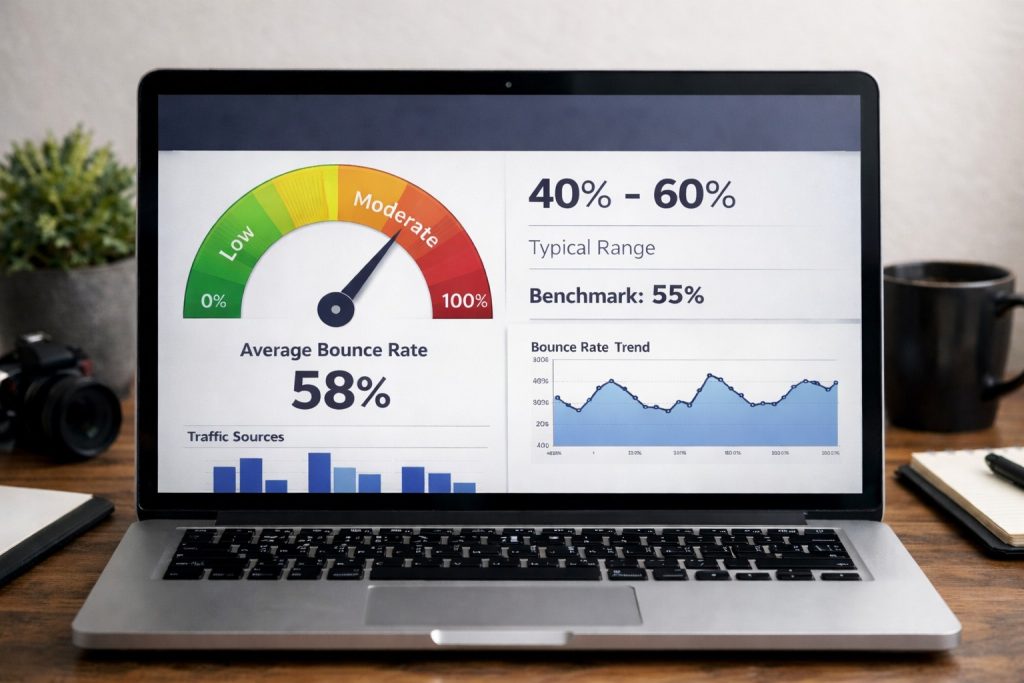
Bounce rate measures how many people leave your site quickly. A “bounce” happens when someone visits one page and then exits. They do not click any links. They do not visit a second page. They simply hit the back button or close the tab.
Think of it like a retail store. A shopper walks in the front door. They look at one shelf and walk right back out. They did not buy anything or talk to a clerk. That is a bounce.
In the past, this was a simple percentage. If 100 people visited and 50 left immediately, your rate was 50%. Modern tools like Google Analytics 4 (GA4) look at this differently. Now, they focus on “engagement.” If a user stays for more than 10 seconds, it is no longer a bounce.
Why Do People Leave Quickly?
Several factors cause a high bounce rate. Most relate to the user experience.
Slow Loading Times: Nobody likes to wait. If your page takes five seconds to load, users will leave. They want answers fast. A slow site feels broken or old.
Bad Content Match: Sometimes the page does not match what the person searched for. If they search for “best running shoes” but land on a page about “how to fix a sink,” they will leave. Your content must fulfill the promise of your headline.
Poor Mobile Design: Most people browse on their phones today. If your site looks messy on a small screen, people will quit. Buttons should be easy to tap. Text must be easy to read without zooming in.
Technical Errors: A “404 Not found” page is a major turn-off. Blank screens or broken scripts also drive users away. Regular audits help you find and fix these bugs.
Ugly Layouts: First impressions matter. If your site looks like it was made in 1995, users will not trust you. Cluttered sidebars and too many pop-up ads make people leave.
Does Bounce Rate Affect Your Rankings?
Google says bounce rate is not a direct ranking factor. This means a high number won’t automatically tank your spot on page one. However, the data tells a story.
If everyone leaves your page in two seconds, Google notices. They see that users are not finding what they need. This is called “pogo-sticking.” It signals that your page might not be relevant. Over time, this can hurt your visibility.
Working with an SEO Agency in Gurgaon can help you dig into these numbers. They look at the “why” behind the data. They help you turn those bounces into leads.
Comparing Bounce Rate by Channel
Not all traffic is the same. Where a user comes from changes how they behave.
- Social Media: People on apps like Facebook or X have short spans. They click a link, read a quick bit, and go back to their feed. High bounce rates are normal here.
- Email Marketing: These users already know you. They often have lower bounce rates because they trust your brand.
- Organic Search: These people have a specific goal. If you answer their query well, they might stay to learn more.
- Direct Traffic: These people typed your URL into the bar. They are your most loyal fans. They usually browse many pages.
Understanding User Psychology
To fix a high bounce rate, you must think like a visitor. Most people make a choice in less than three seconds. They look for specific clues that they are in the right place.
- Relevance: Does the page look like the topic I searched for?
- Trust: Does the site look safe and professional?
- Ease of Use: Can I find the info without hunting for it?
- Value: Is the answer here better than the last site I visited?
If any of these clues are missing, the user will leave. You must win their trust the moment the page loads.
Common Myths About Bounce Rate
Many people get scared by this metric because of false info. Let’s clear some things up.
Myth 1: A high bounce rate always means your site is failing.
If you have a one-page site or a landing page for a single event, a bounce is expected. The user gets the date and time, then leaves. This is a success, not a failure.
Myth 2: Lowering bounce rate is the only goal.
If you trick people into clicking a second page, your rate goes down. But if those users are annoyed, they won’t buy from you. Focus on value, not just numbers.
Myth 3: Google uses bounce rate to penalize sites.
Google looks at dwell time and click-through rates more than a simple bounce. They want to see if the user found the answer they wanted.
Detailed Steps to Improve Retention
You can take several paths to keep users active on your site.
1. Improve Your Content Flow
Use the “Inverted Pyramid” style of writing. Put the most important info at the top. This gives the user an immediate success. Then, go into the smaller details.
- Use subheaders every 200 words.
- Use bold text for key points.
- Keep sentences under 20 words.
- Use simple words like “buy” instead of “purchase.”
2. Optimize Page Speed
A fast site is a happy site. You should aim for a “Core Web Vitals” pass.
- Images: Use WebP format instead of PNG.
- Hosting: Pick a server close to your main audience.
- Caching: Store data on the user’s phone so it loads faster next time.
3. Smart Internal Linking
Every page should be a doorway to another part of your site.
- Link to your “About Us” page in the intro.
- Link to “Best Sellers” in your product descriptions.
- Use descriptive text for links like “Read our guide on speed” instead of “Click here.”
4. Enhance Visual Appeal
Design dictates trust. Use plenty of white space. Do not cram too many images on one line. Use a font size of at least 16px for easy reading. Avoid bright, clashing colors that hurt the eyes.
The Role of User Intent
User intent is a big part of SEO today. You must understand what the person wants. Are they looking for info? Are they ready to buy?
If a user wants a quick fact, they will leave fast. This is fine. If they want a deep guide, they should stay longer. Align your page structure with these goals. For example, put a summary at the top for people in a rush. Put the deep details below for those who want to study.
An experienced SEO Agency in Gurgaon focuses on this intent. They ensure your landing pages satisfy the user’s hunger for info. This builds authority and trust with your audience.
Analyzing the New Metrics in GA4
Google Analytics 4 has replaced old bounce rate with more useful stats.
- Engagement Rate: This is the opposite of bounce rate. If your bounce rate is 60%, your engagement rate is 40%. It feels better to focus on the people who stayed.
- Engaged Sessions per User: This shows how many times a single person interacts with your site.
- Key Events: Track how many people hit “Submit” or “Buy.” This is more important than how many people left.
Using Video and Interactive Tools
Static text can be boring. Add life to your pages with different media.
- Explainer Videos: A 60-second clip can explain a complex topic better than 1,000 words.
- Polls and Quizzes: These force the user to click. Once they click one thing, they are more likely to stay.
- Calculators: Tools like Price Estimator keep users on the page for a long time.
Final Thoughts
Bounce rate measures the position (health check) of your website. It tells you whether your visitors are satisfied or disappointed. Although this is not a magic figure for Google, it does have an impact on your profits.
Focus on speed, clarity and value. Make your site easy to use on every device. If you provide the best answer to the searcher’s question, they will stay on your site. Satisfied users bring better rankings and more growth for your business. Keep testing new ideas and keep an eye on your data. Small changes often lead to big results in the long run.
